
Look & Feel Prototype
The aim of the following prototype was to get a sense for how the mechanics could potentially feel with the given materials.
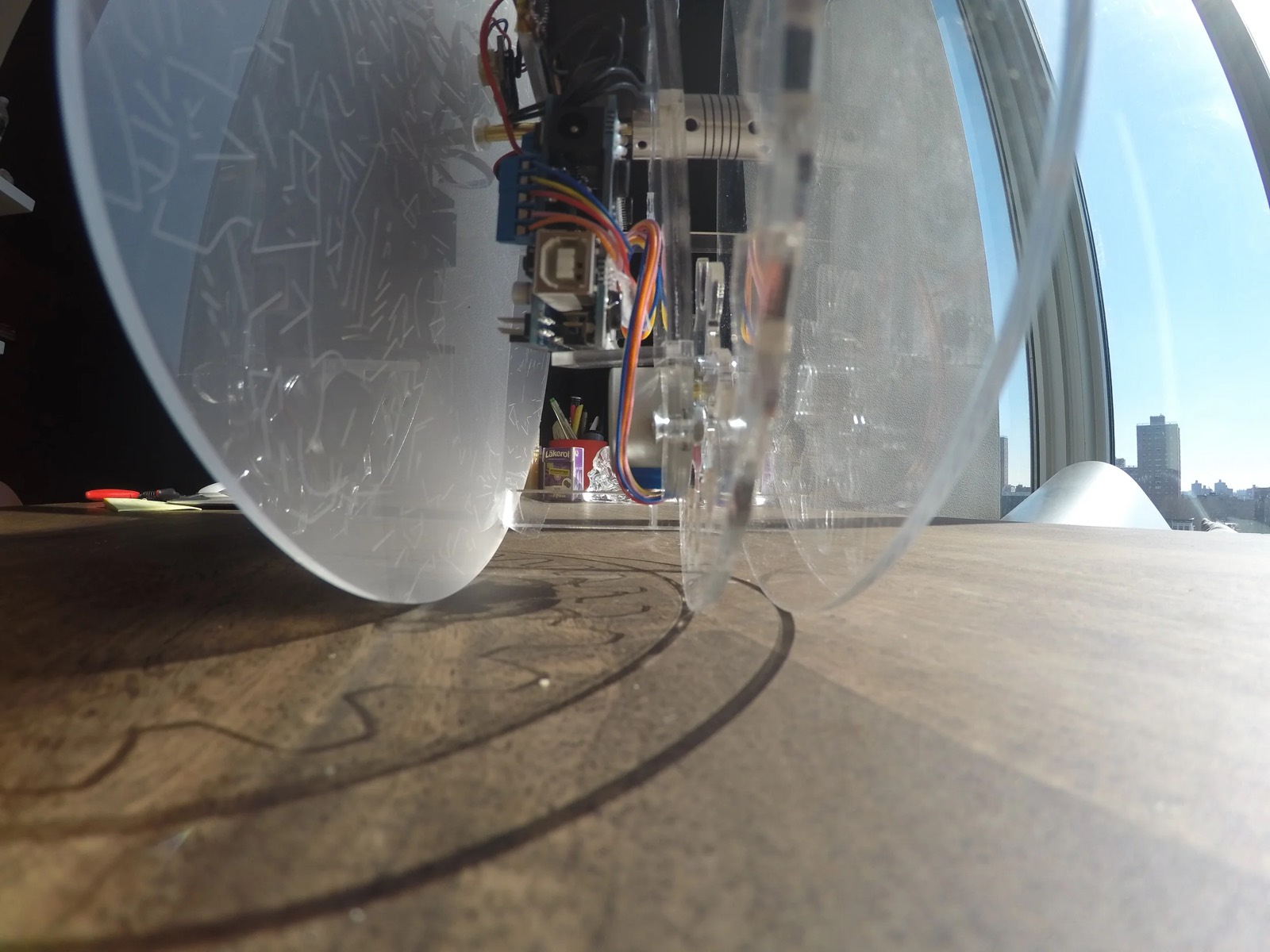
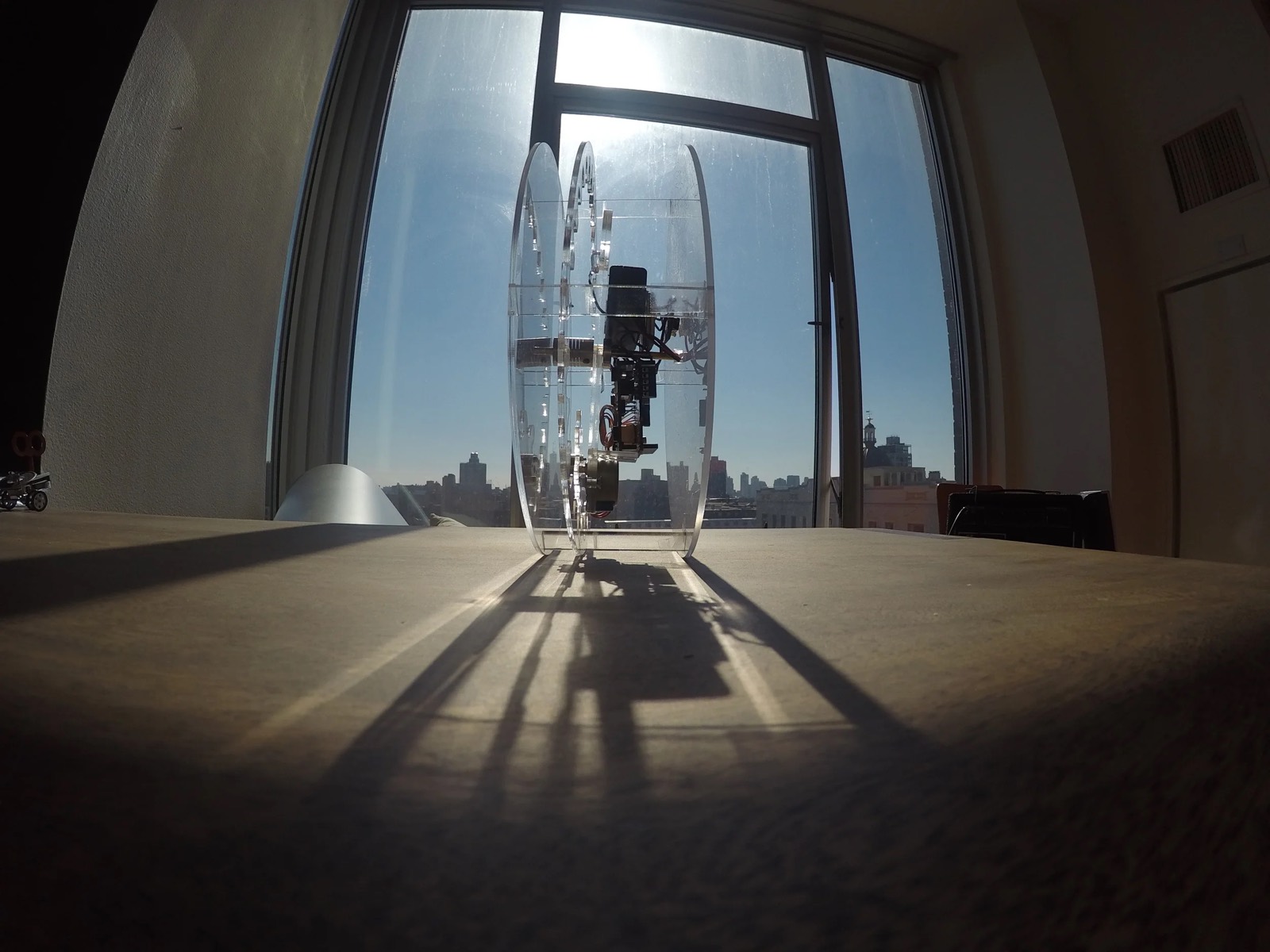
The aim of the following prototype was to get a sense for how the mechanics could potentially feel with the given materials.
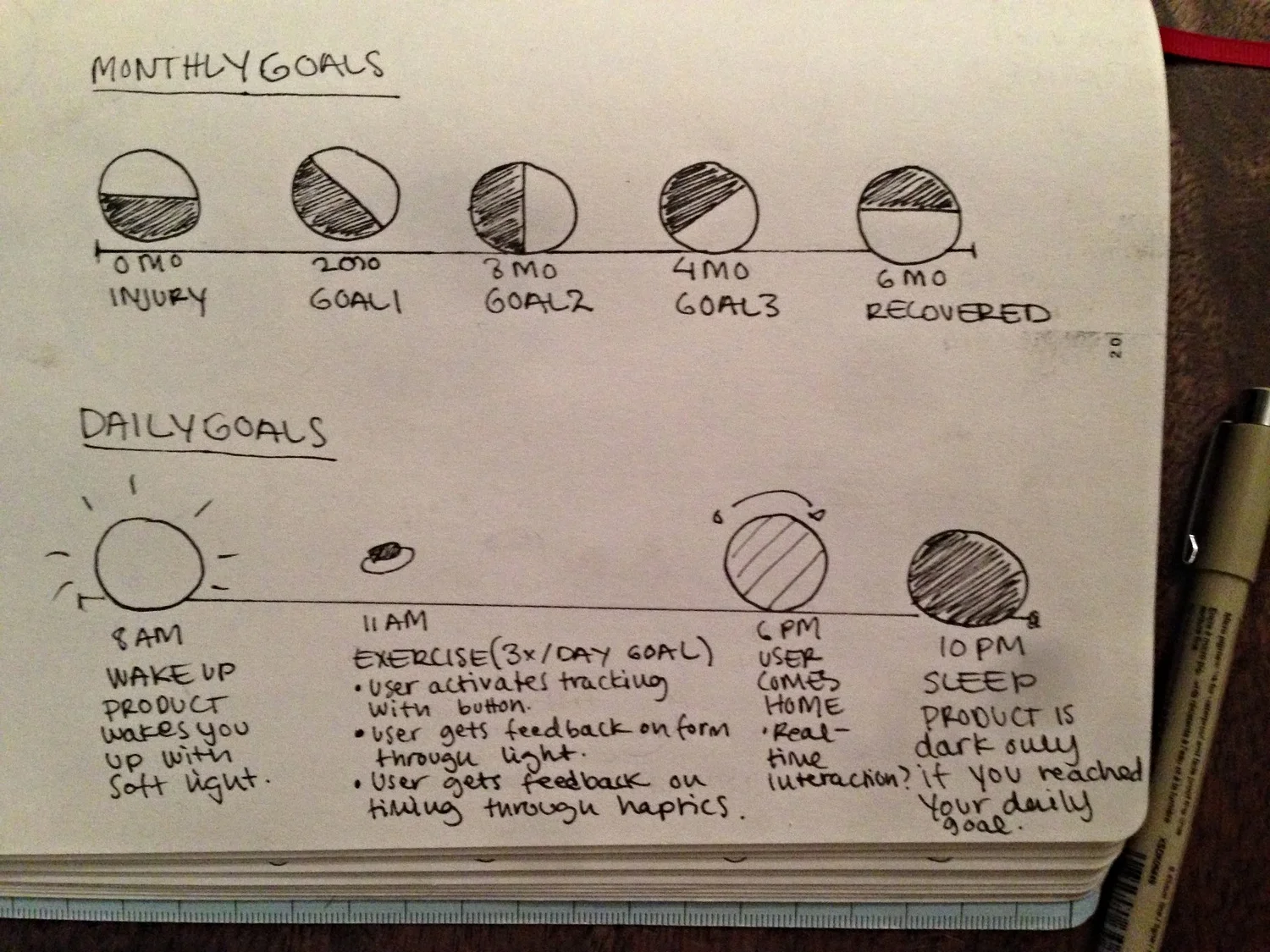
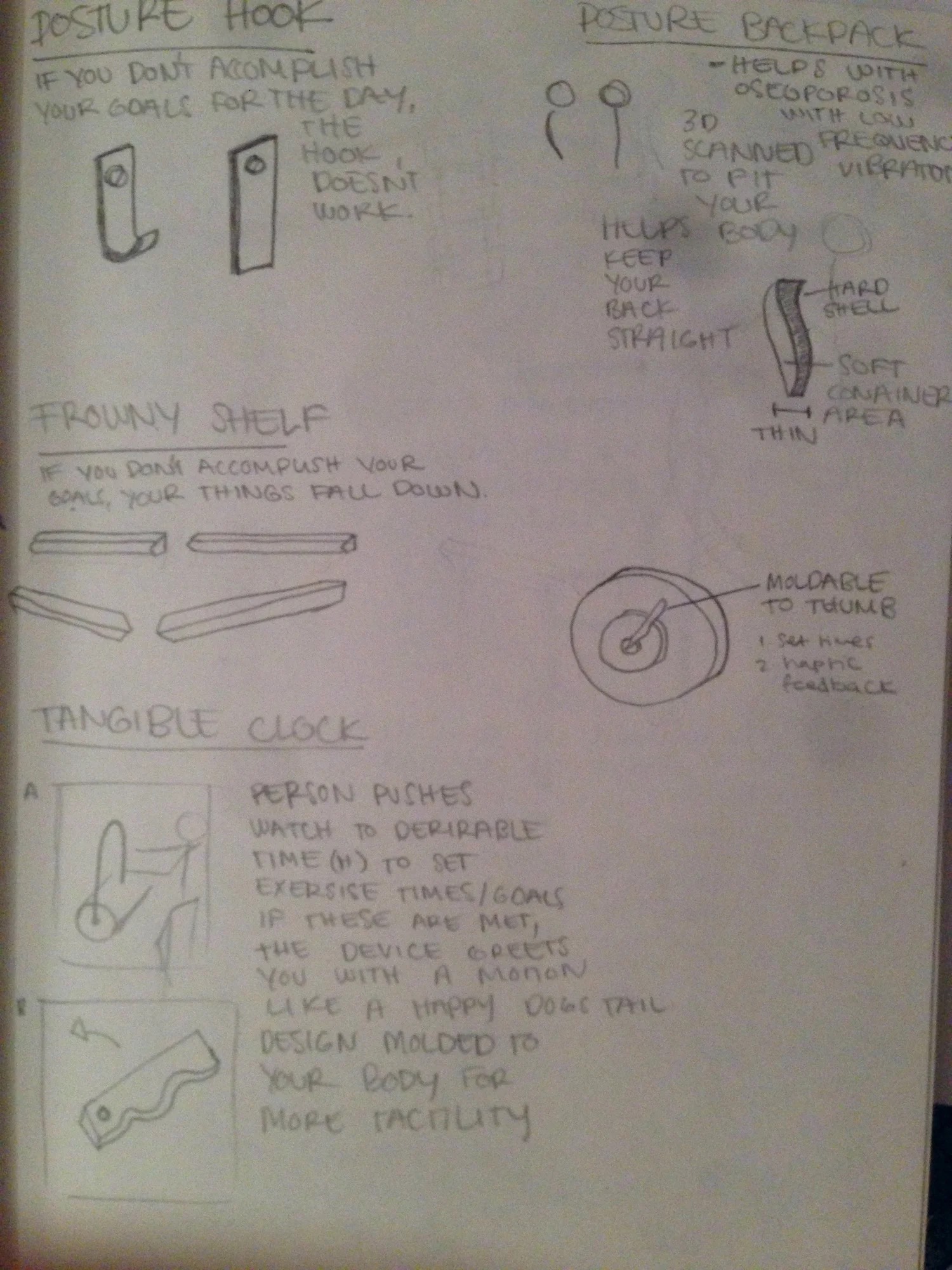
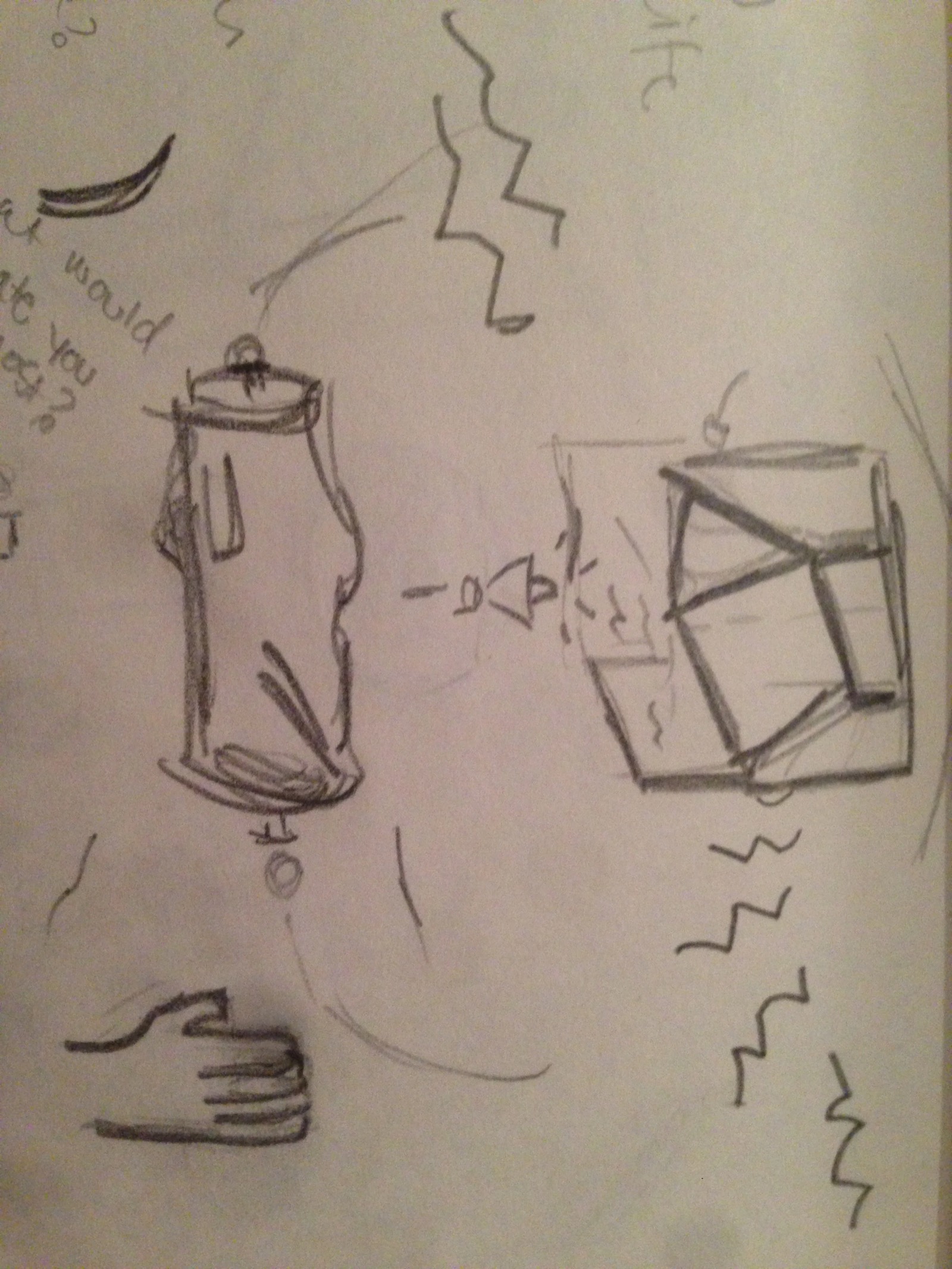
I have reached a point where I have decided to take a certain direction with the form and interaction, although details will still need to be tested and improved with prototypes going forth. Below you can see my initial sketches of what I imagined the most important user interactions to be like. For a more detailed description, scroll down for a task analysis.
At first I imagined the rotation of the device to give you feedback regarding your form, and the light to give you feedback regarding your timing. However, since the wearable would give you real-time feedback regarding form, I decided it would be more useful to use the rotation of the device as an indication of your overall progress. This way, I am able to slightly gamify the experience as well as letting the user know how well they have performed and if they have that day moved closer or further away from their goal. The goal of each day is to have the device switch off its light.
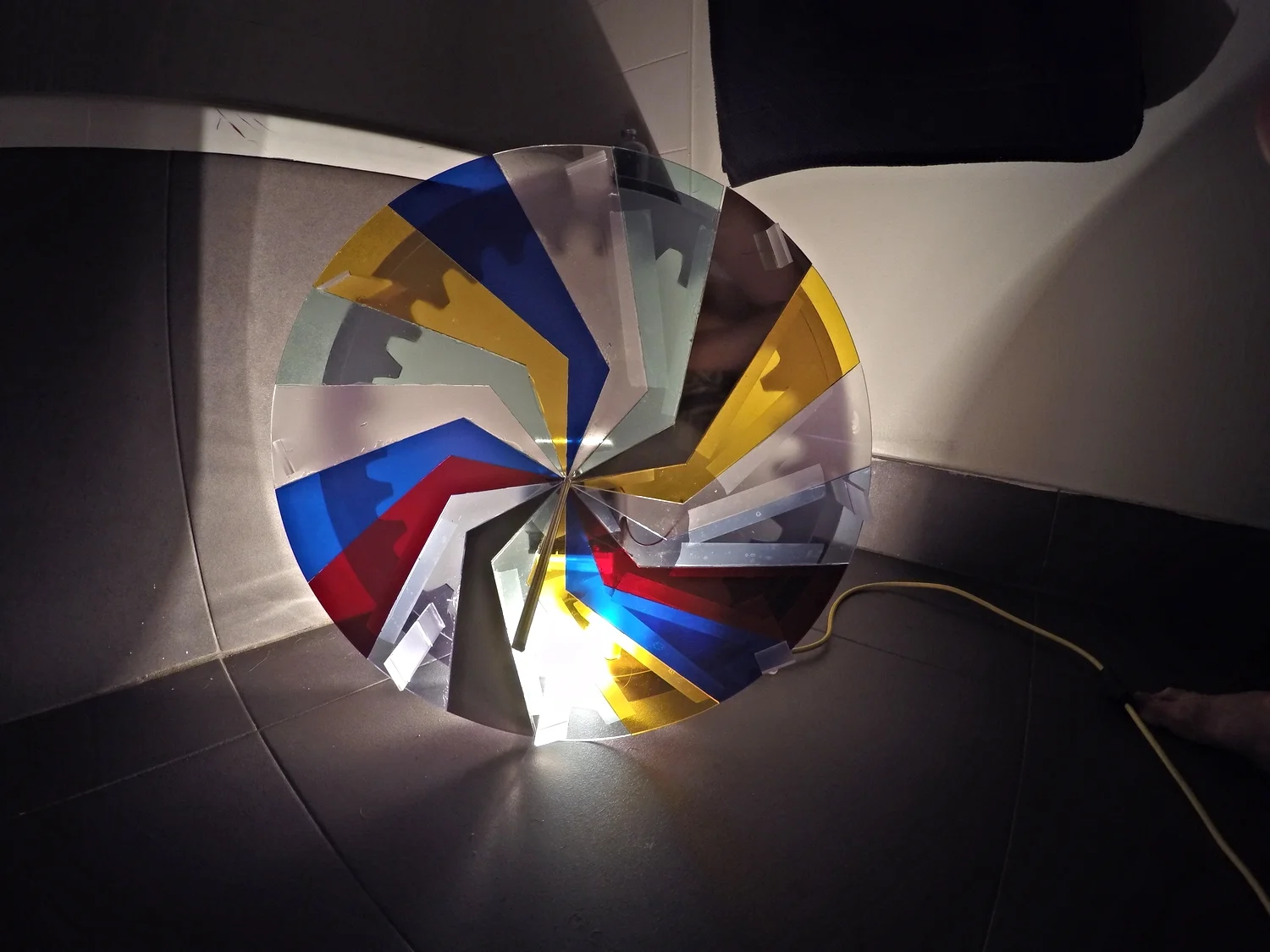
Below you can see a quick look and feel prototype. Things I need to consider for the future is how the lighting can play a more integral part in the piece, and how some real-time movement can be added for the user to create a more intimate bond with the object. I aim to further my designs this upcoming week. Central questions I am asking myself at the moment are:
Pre-purchase
1. User is recommended to use product by physical therapist due to a certain condition.
2. User decides to purchase the product, and user and physical therapist together come up with a rehabilitation plan and calibrate the device.
3. User gets to customize device according to set parameters.
4. User takes product home.
Chronological tasks
5. User sets alarm through app.
6. User wakes up by gradual light.
7. User puts on wearable for the day.
Non-chronological tasks
8. User pushes button on wearable to activate tracking and performs their routine with visual and haptic feedback.
9. User is able to get a sense of the status of their overall recovery plan and performance by glancing at the device.
10. User is reminded to perform their exercises by their caretaker, housemate or partner.
11. User is reminded to perform their exercises by the device or wearable.
12. User gets positive encouragement by their caretaker, housemate or partner.
13. User gets positive encouragement by the device.
14. User gets negative feedback by the device.
16. User forgets to perform the exercises at the end of the day and is reminded by the device through light.
I hope to be able to experiment with form as much as possible for the next upcoming week, so that I can settle on a final design to work with. It feels like I have been moving forward slowly, but I have learnt a lot. Much of what has slowed me down is getting aquatinted with different types of motors and how to handle them - every type and even brand is its own beast.
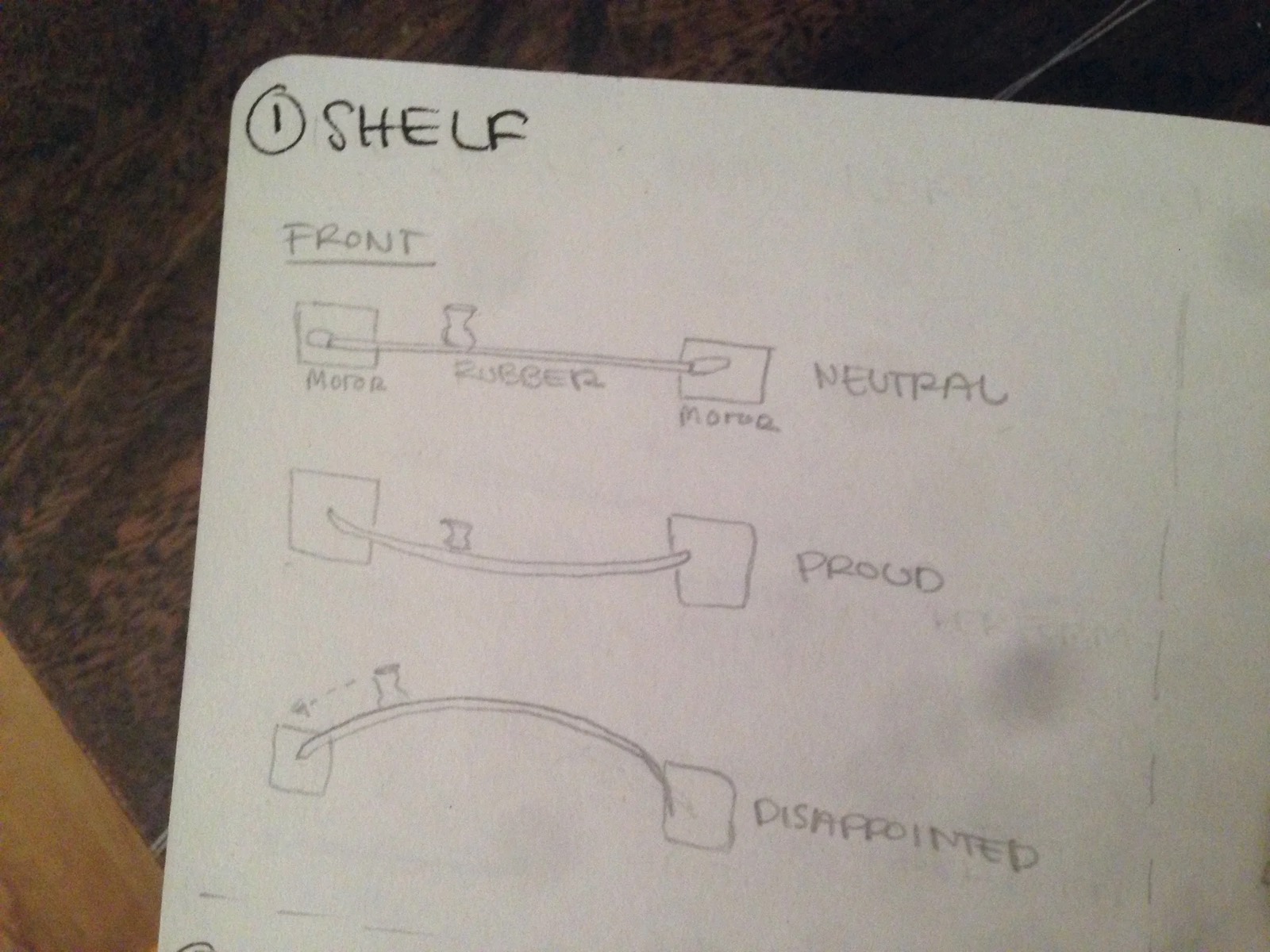
The shelf is something that I have been thinking about for a longer time, and although it might not be as much of a desired product and more of a critical design piece (your things wouldn't fall off of the shelf however) I like the idea of leveraging a utilitarian object that already exists in your home, and making it come to life. Why get a separate object that can tell how well your body is doing? There is something about the algorithm behind it that makes sense to me as well (see post on inspiration & objectives). It turned out this was more difficult than I thought, but am testing out a final solution below that I will fine tune. I figured I could use a string to transform the rotational motion into linear, since I don't have a solenoid. I'm a big fan of using what materials are available - design constraints inspire creativity!
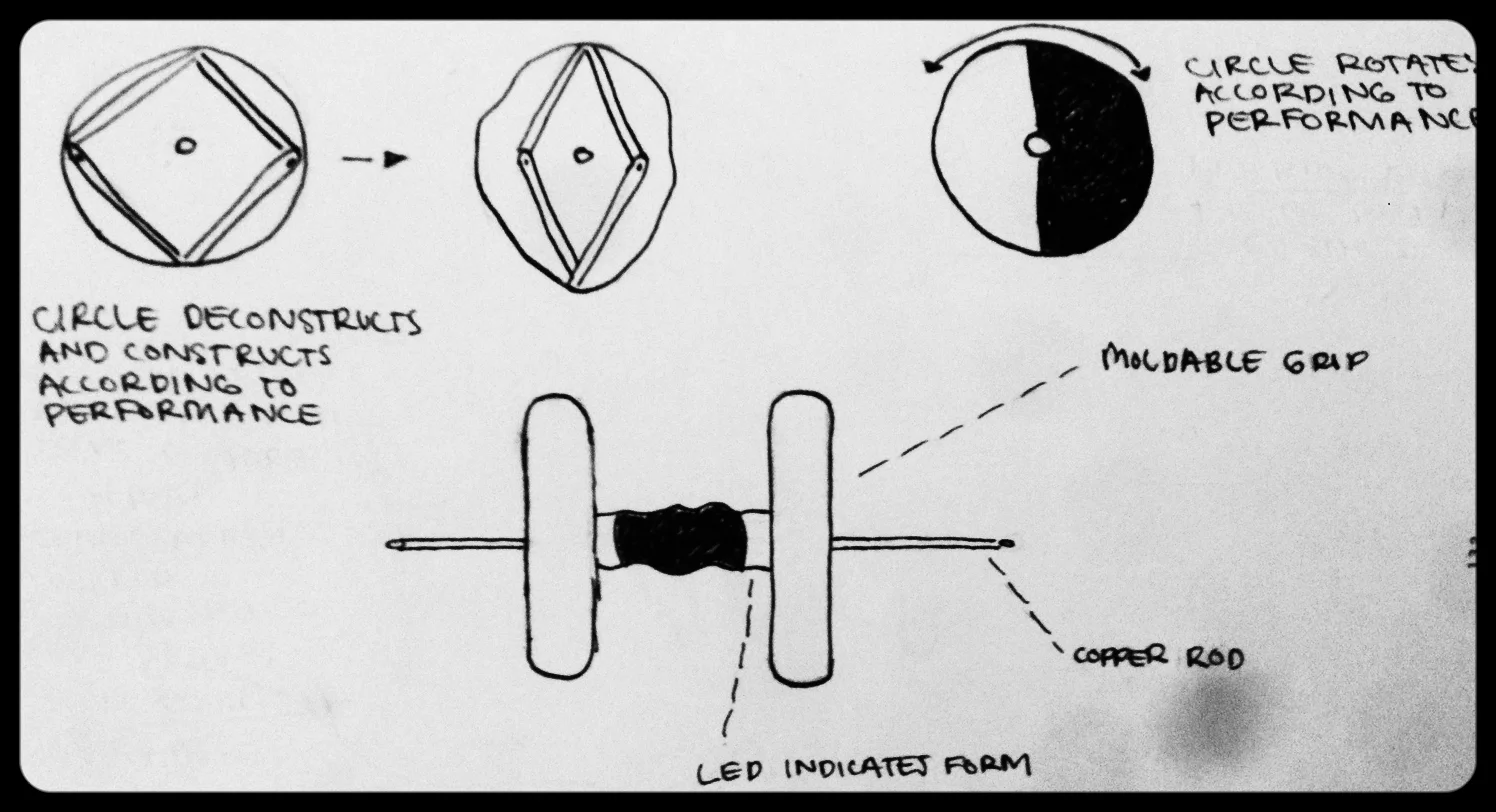
Going forth I have two directions: one that would be a wearable with a separate tracker, and one that is a modular weight.
Below you will see a circular design that I have started to prototype, that will be divided into two or more slices that would visually map with your bodies progress.
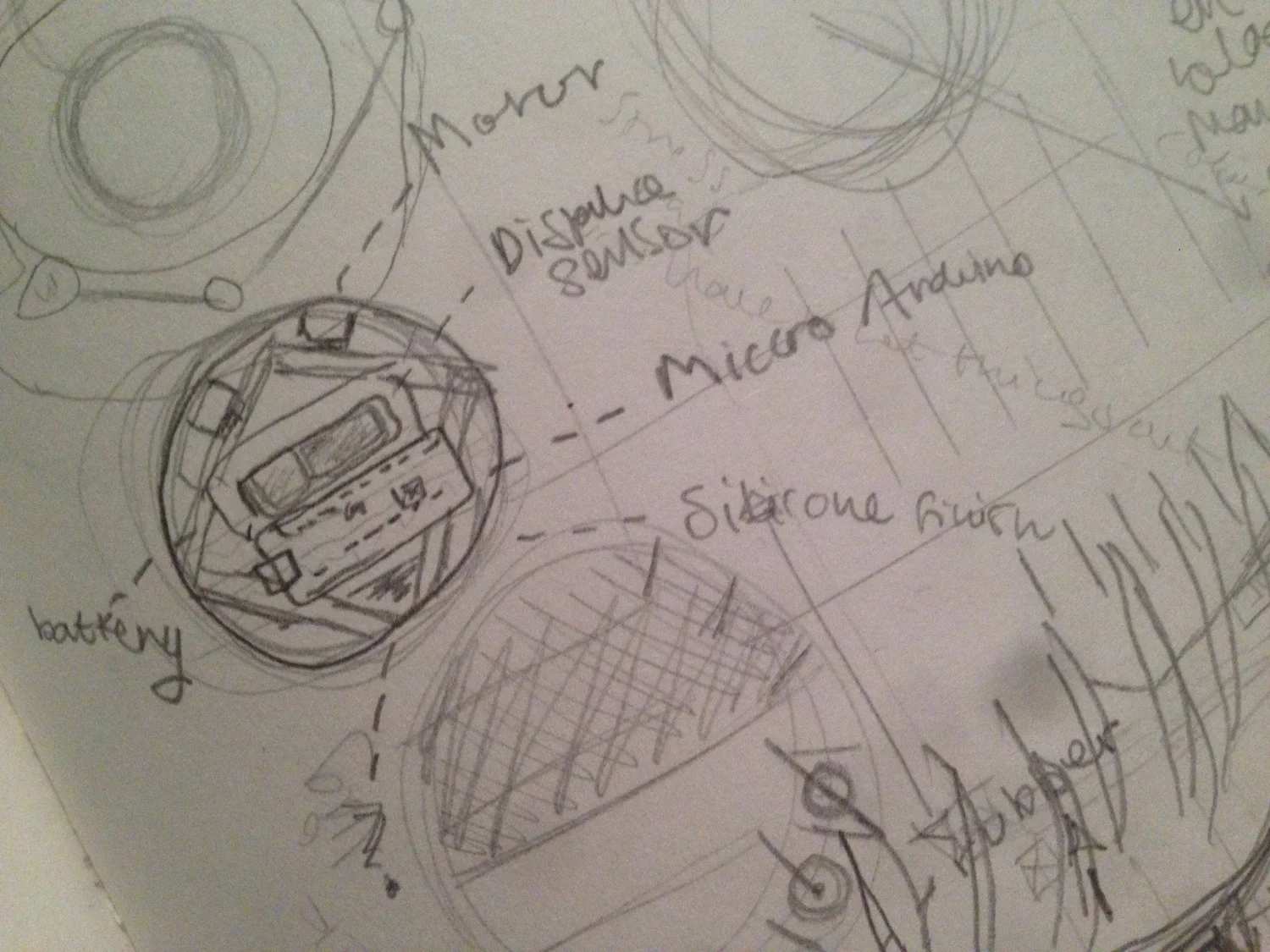
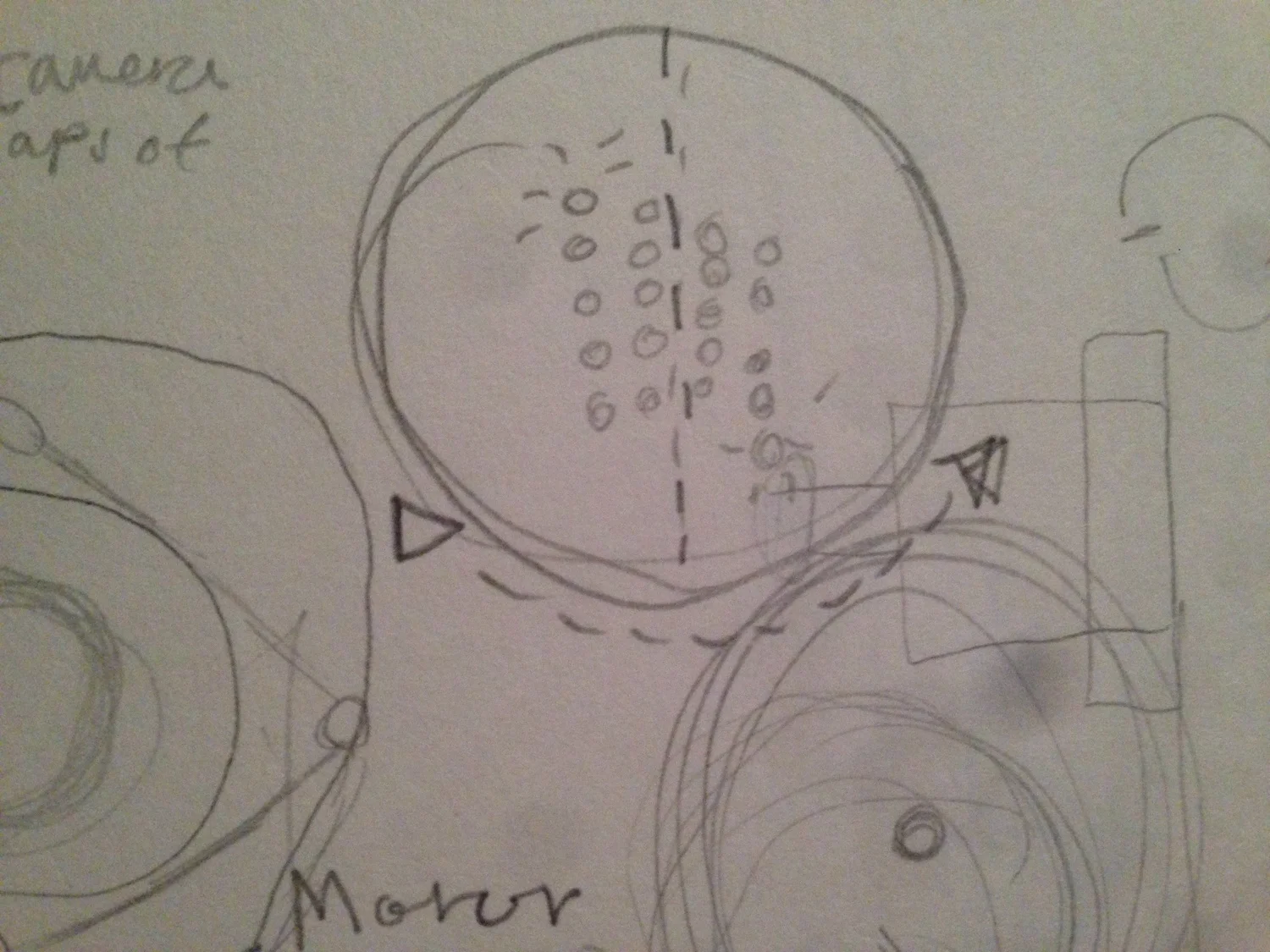
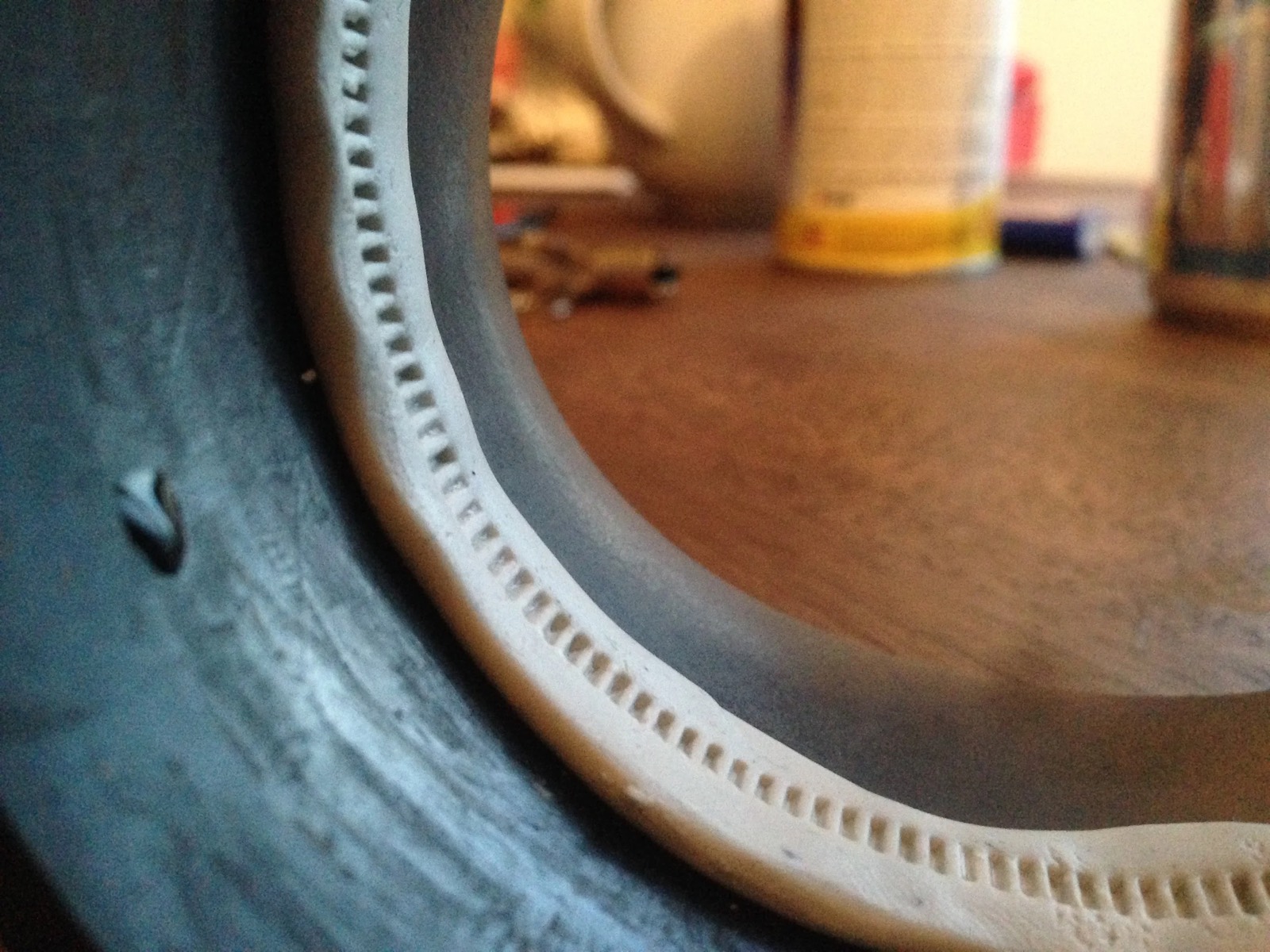
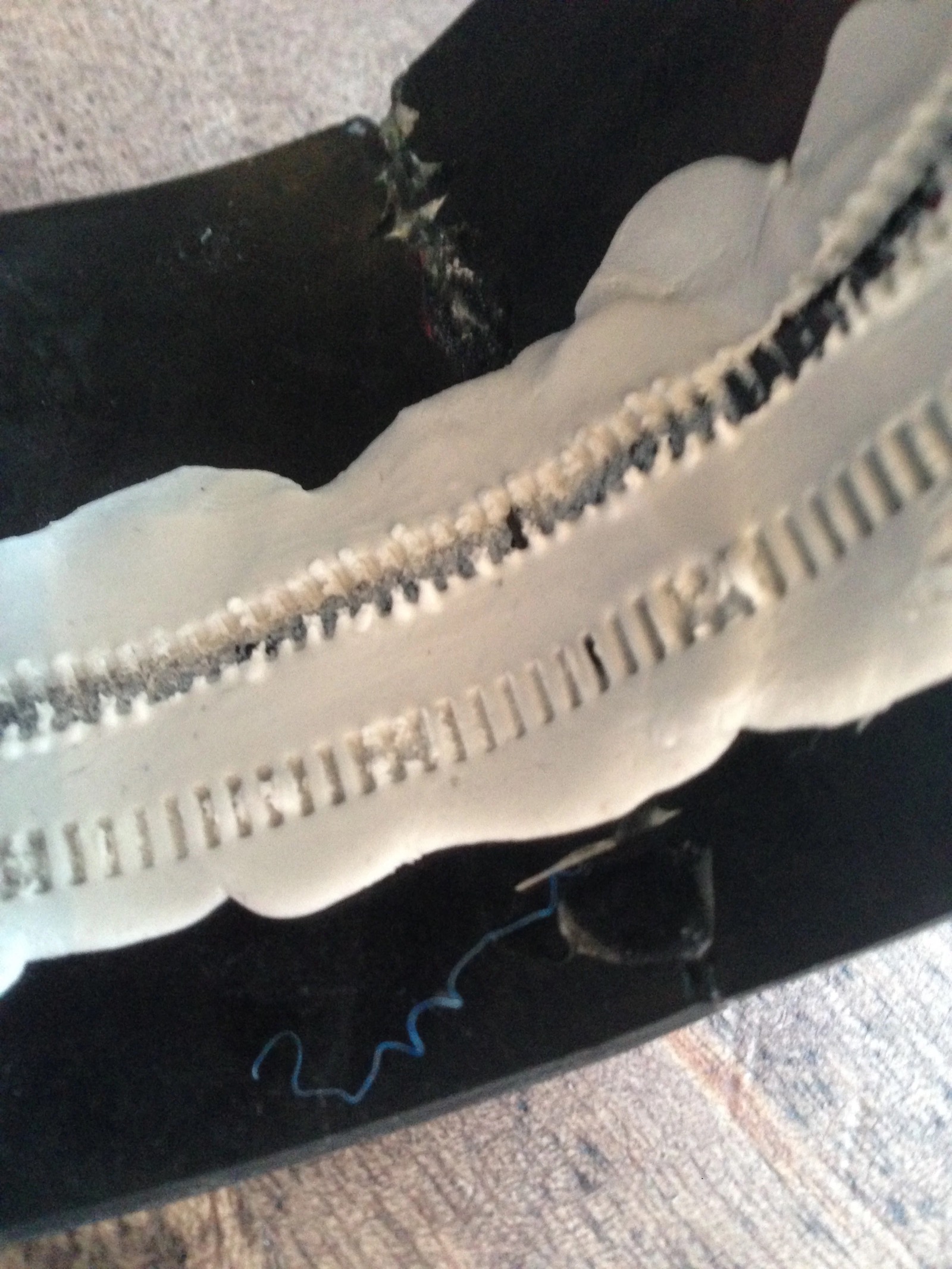
I will use a stepper motor and a gear, and I actually made half of the gear using clay (!), as this was all I had at hand. It took several iterations and finding the exact right time to get the right consistency of this particular self drying clay.
Here I am working on a clay sculpture that works a little bit like a scale, with the pivoting point in the middle. The ball will move according to how well you have done, and there are small pockets where it will rest for more accurate mapping. Also, metaphorically you need to overcome hurdles along the journey.
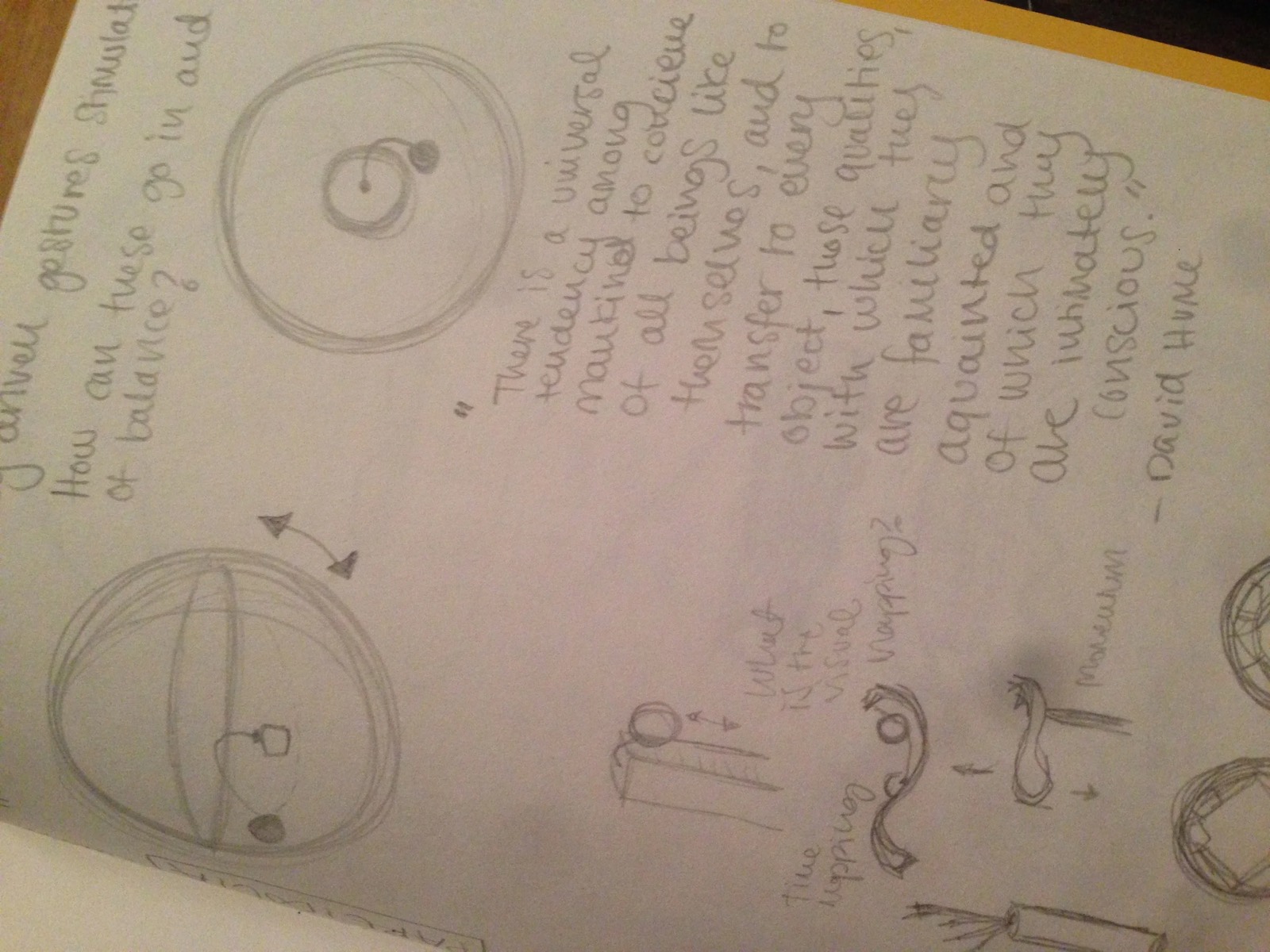
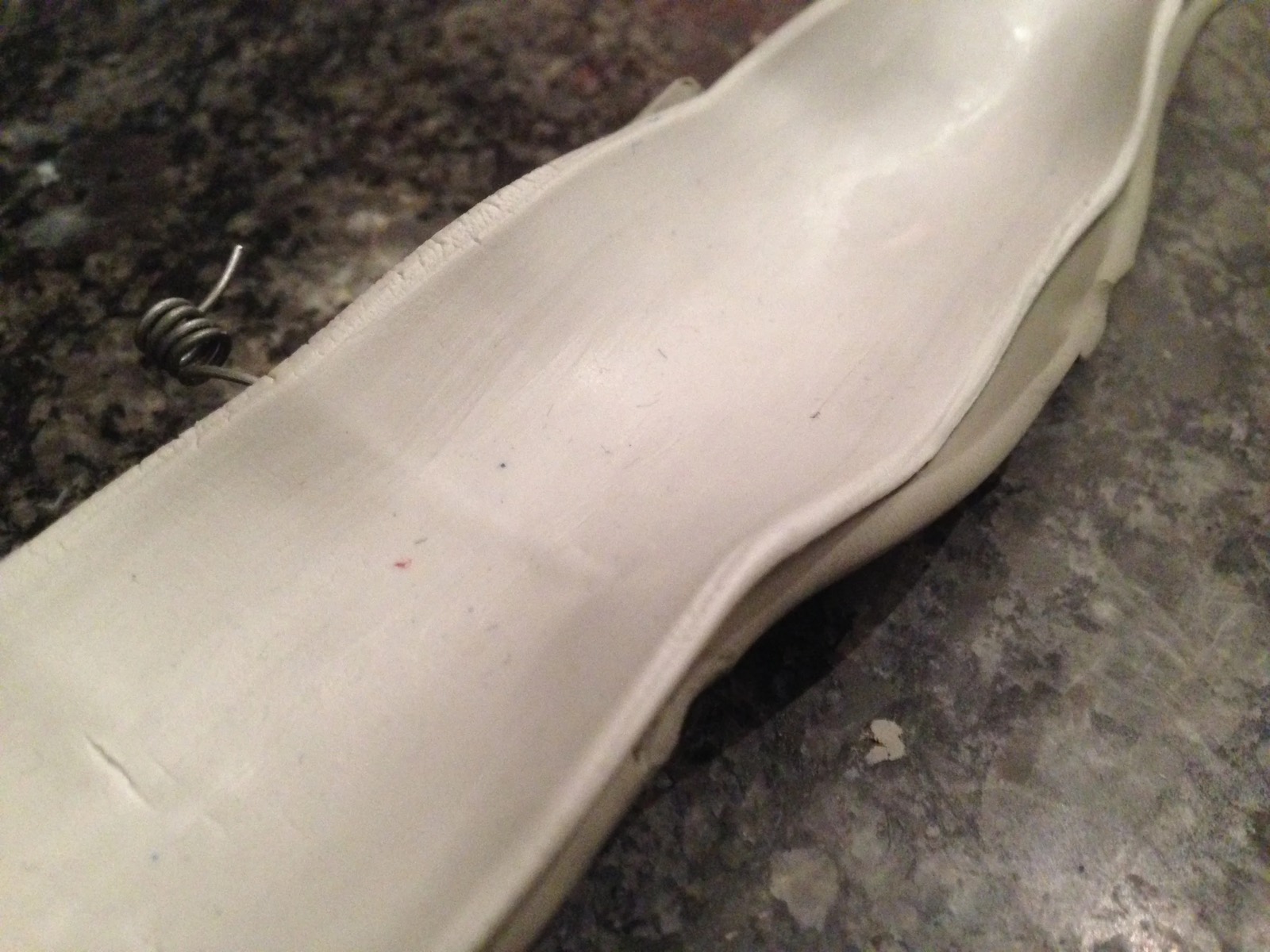
I would love to combine both momentum with the actual controlled input from your body. The ticking sound also makes us think of time.
The third concept I want to explore is the deconstruction/construction of the object in and of itself. Below I am working on a round object that will squish and deconstruct from the perfect and balanced circle - just like your body does when not doing well.
Unfortunately when I was about to assemble it the motors broke. These servo motors from RadioShack are of very low quality and I don't recommend them. Generally speaking I have had a lot of trouble with servo motors, as they tend to behave erratically. For the future I plan to invest in more high quality motors for more control and smoother movement.
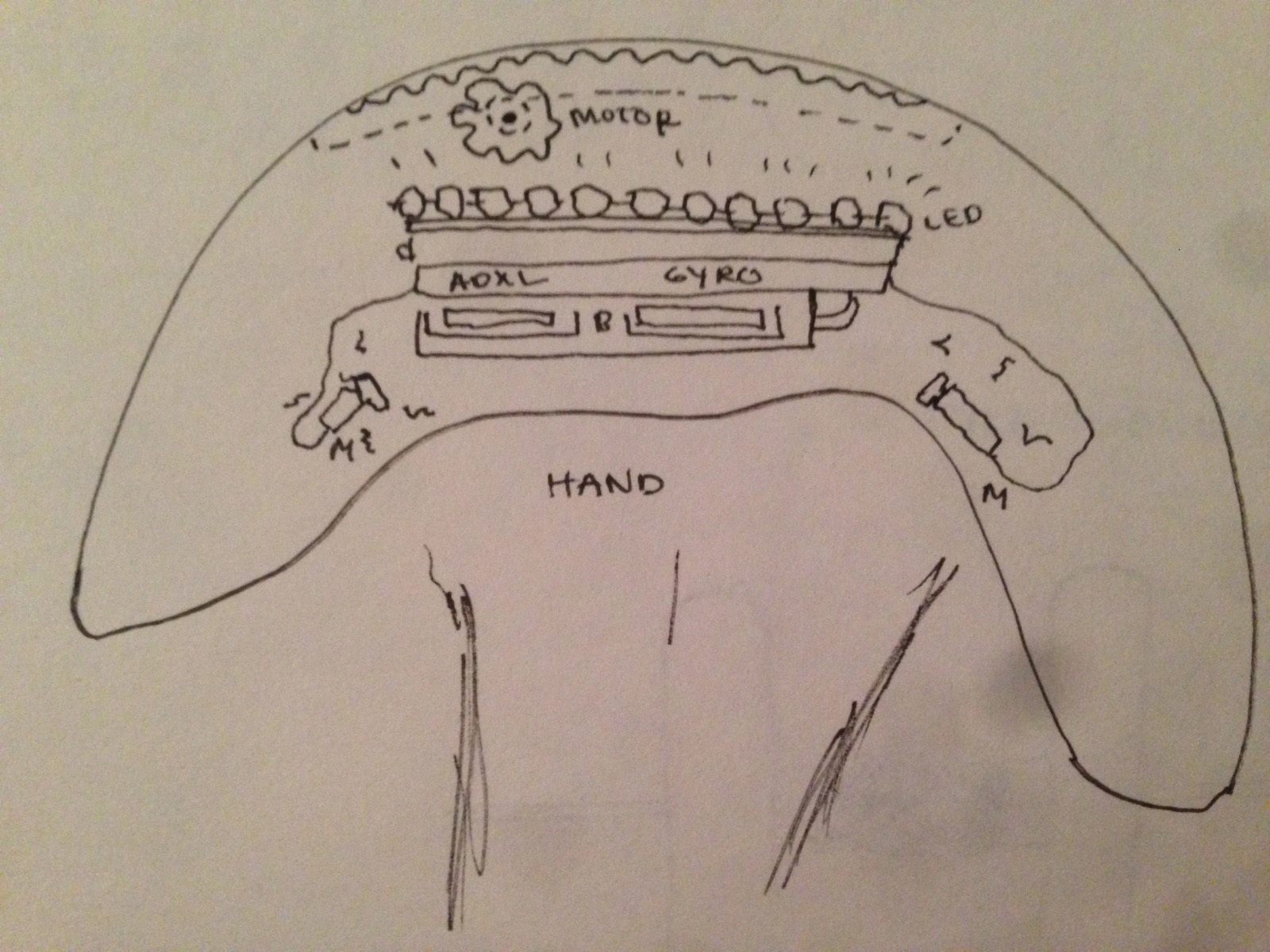
Below is another idea I have been thinking about, one that is a self-contained product that has both the tracker, LED shield indicator, music visualizer so that you can groove out to your exercises and when you turn it - it balances as feedback.
Different types of design case study methodologies have guided my user-centered explorations, all of them focusing on one specific question. For my first prototype I aimed to answer how kinetic movement can have presence and if it is rewarding after completing a specific type of exercise. For this I set up a flex sensor to measure how many bicep curls the user had completed within a specific time frame. An abstract set of rectangular shapes would then move in accordance to your performance. By asking people to fill out a questionnaire before and after as well as seeing them interact with the device, I was able to gather that it indeed was very rewarding to see this object move as a response to the users exercise. However, users reported they would have liked to see more real-time feedback, and the flex sensor as a wearable was uncomfortable and redundant.
As testing with my user group has been difficult due to liability issues, the next natural step was to put myself in my users situation to the greatest extent that I possibly could. In my opinion, good design stems from empathy. So I challenged myself to be my own observer in an empathetic design probe, where I emotionally detached myself from my legs for one full day. I aimed to put myself in the situation of someone that has T9-T12 spinal cord injury, which typically means that you have good control of your upper body, but no control or sensation in your legs.8 Although I have witnessed my mother being bedridden for over six years, the insight that I gained during these twelve hours where invaluable to my design approach. I found myself loosing perception of time as I was physically confined to this one space. I also felt helpless, and experienced stiffness in my legs much quicker than expected. This lead me to incorporate range of motion exercises into my design, as I experienced how crucial stretching and simply moving around to stimulate blood circulation is to our wellbeing. But more importantly, how can I break up this monotony? Although I could feel the stiffness in my legs, I didn’t feel inspired to perform the exercises. Rather I wanted to immerse myself in something more escapist. So how can visual and kinetic cues inspire my user to move?
With these aspects in mind, I wanted to nail down the pure functionality and user experience that such a device needs in order to be effective. The findings above lead me to consolidate my design into one contained object, creating a device that allows for real time visual as well as haptic feedback in accordance to how timely you have performed your routine. Incorporating an accelerometer also allows my user to see if they are holding proper form. This way I am able to test the pure functional aspects of such a device without worrying about the emotional aspects getting in the way of results and vice versa. The motion data is captured and displayed on a webpage using Arduino Yun. Below I am also testing how angular momentum might be used in order to fluctuate the weight.